
Pike County Weekly Arrest Log
The strongest multi-day source is the Pike County Journal Reporter arrest report. One report covered June 29 through July 5. A later one ran August 10 through August 17. That Monday-to-Monday pattern repeats. The paper promises no fixed posting hour, though, and no guarantee that every arrest makes the column.
Entries arrive grouped by agency. A Pike County Sheriff's Office subsection, for example, appears in some reports. It shows which office reported each arrest in that span. What it cannot show is the current custodian. Nor does it cover a release after booking, or the court's final word on the charge. The newspaper reports the news; the official Pike County Jail database it is not.
Read Pike County Blotter Entries
Start with the report's stated date range, not its web-post date. Next, separate the arresting agency from the booking custodian. Pike Sheriff, Zebulon Police, Molena Police, GBI, and Georgia State Patrol can all open a case. So can other officers. Only when Pike County Jail accepts custody does a booking record begin there.
- Note the first and last dates stated in the report.
- Find the agency heading before reading the name and charge.
- Treat the charge as an charge, not a court finding.
- Call Pike County Jail for current custody, bond, transfer, or release.
- Use the Pike Clerk’s case route for the later disposition.
A repeated name proves nothing by itself. Match the date, the agency, and the case details before drawing a link. Abbreviated charge? Pull the exact citation, plus any amendment, from the agency or court file.
Pike Arrest Log Field Guide
The newspaper format stays a narrow news inventory. Fields the paper never printed should not be filled in by guesswork. For missing details, ask the jail or the arresting agency directly.
| Field | Verified treatment |
|---|---|
| Report date range | Weekly Monday-to-Monday windows observed |
| Person name | Published in the news report |
| Arresting agency | Entries grouped under agency headings |
| Charge or reason | Published as an charge, sometimes abbreviated |
| Booking time or number | Not a verified standard newspaper field |
| Bond and release | Confirm through jail or court records |
| Booking photo | No consistent photo policy verified |
The weekly range reflects a publishing choice, not a custody rule. Someone may walk free before the report ever prints. A booking near the edge of the window might surface in a later issue, or never appear at all.
Pike Weekend Arrest Log Timing
No Pike-specific posting hour or holiday rule exists in writing. Weekly examples close on a Monday. That schedule guarantees neither a set release time nor holiday coverage. A weekend arrest can clear jail processing fast. It may be out long before any newspaper mentions it.
Treat each report as covering only its stated span. A missing name? Check nearby issues, try a spelling variation, and confirm the likely arresting agency. For present custody, call the Pike County Sheriff's Office at 770-567-8431. An absent newspaper entry never proves a booking failed to happen.
Pike Arrest Log Versus Jail Roster
Pike County operates a real jail. The sheriff's official page posts no public roster. It offers no same-day booking search and no stated photo policy. The weekly arrest report cannot fill that hole. It summarizes a past week for news readers. And it says nothing about who sits in a cell today.
For a present-status answer, use the Pike County Jail phone line. When written proof is required, ask the records custodian for a booking or release record. The sheriff's linked quarterly jail reports serve yet another purpose. They tally aggregate compliance figures rather than names. Keep those three sources straight. That keeps a weekly news entry from masquerading as a live jail result.
Pike Arrest Log Archives
Pike County newspapers come in two layers. The current Journal Reporter runs the recent arrest-report series. Older issues of the Pike County journal and reporter live in the Georgia Historic Newspapers collection, complete with browsing, page images, and OCR text. OCR is machine-read, so verify names and charges against the scanned page itself.
Neither layer is a jail archive. Georgia's retention schedule keeps jail booking records ten years past release, jail registers ten years past the final entry, and daily incarceration lists for one year. Those windows promise nothing about online access. Modern county records stay with the local custodian.
Note: Search both newspaper layers for leads, but request the original record from Pike County whenever precision matters.
Request Older Pike Arrest Records
An older search should follow the record chain. Search the current paper by name. Add a charge phrase or "arrest report" to the terms. Search historical issues by date. Study the page image closely. Check the Pike criminal case provider for a case number. Then request the booking record or arrest report from whichever office holds it.
A sharp request names the person, the date range, and the record type. Booking record, jail register, release entry, incident report, and court disposition are five different records. Georgia agencies generally answer within three business days. The answer may be access, a time estimate, cost details, or a claimed exemption. They do not have to build a custom list that never existed.
When a newspaper search stalls, turn to the wider hub. The county-wide Pike County recent arrests hub maps the sheriff, jail, court, and records-request channels.
Pike County Secondary Arrest Sources
Official jail, agency, and court records anchor any Pike County arrest search. The Journal Reporter then adds a weekly news entry. The Georgia Gazette Pike section sits outside the official chain, offering county-labeled pages with booking dates, names, and charge or reason details. Some entries include an image. Treat it as a lead, not a record.
The Gazette can go stale. Its pages get copied, and gaps are common. No verified city-only Pike filter exists there, and the site cannot confirm present custody or any disposition, so no image on it counts as an official current Pike photo. Mugshots.com holds older Pike index material. RecentlyBooked, Busted Newspaper, Arrests.org, and Mugshots.zone publish no verified Pike County, Georgia section. The Gazette county page may help discovery, but it is no Pike Sheriff roster, and no image from its booking pages appears here. The Pike County Sheriff’s Department page posts the official jail contact for confirming a name found in a weekly report.
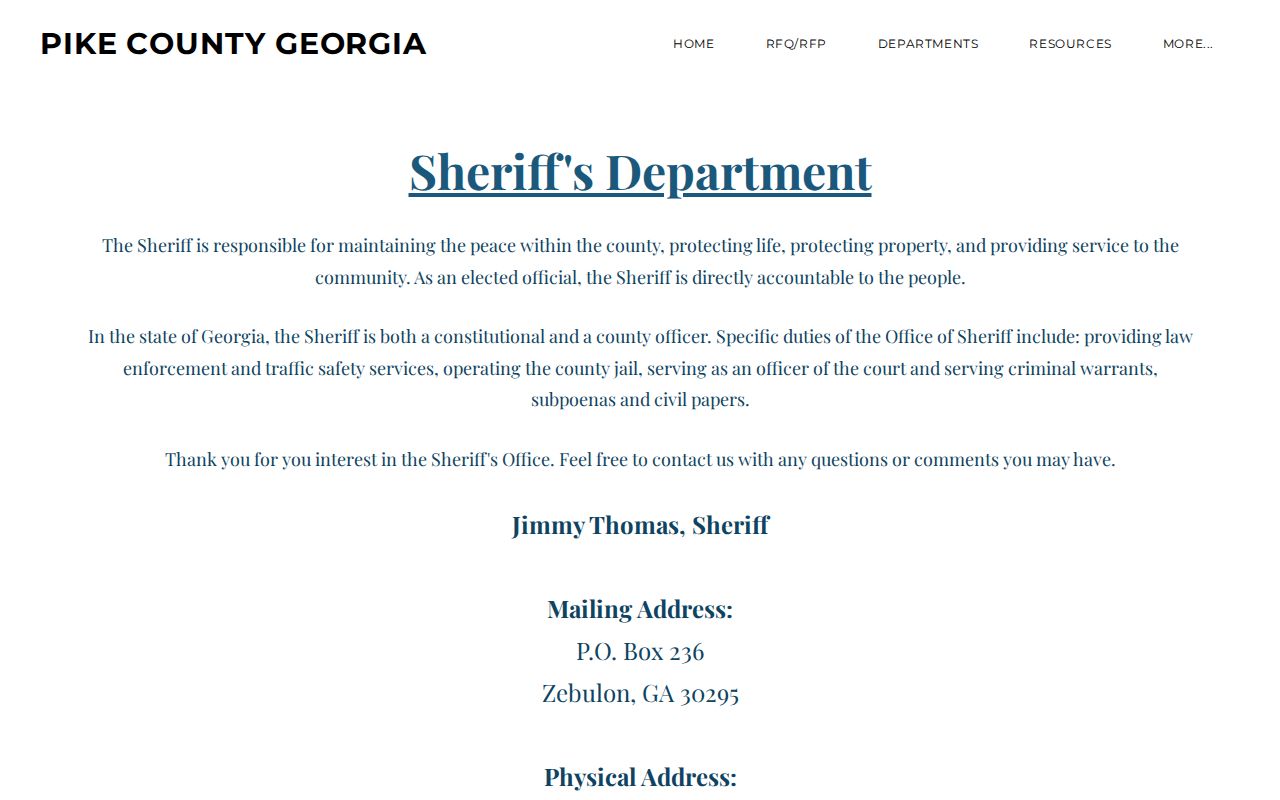
The official page still gives the county route, even though it publishes no searchable arrest log. It points to the offices that hold the records. The Pike County Clerk criminal division page lays out the official path for the case record.
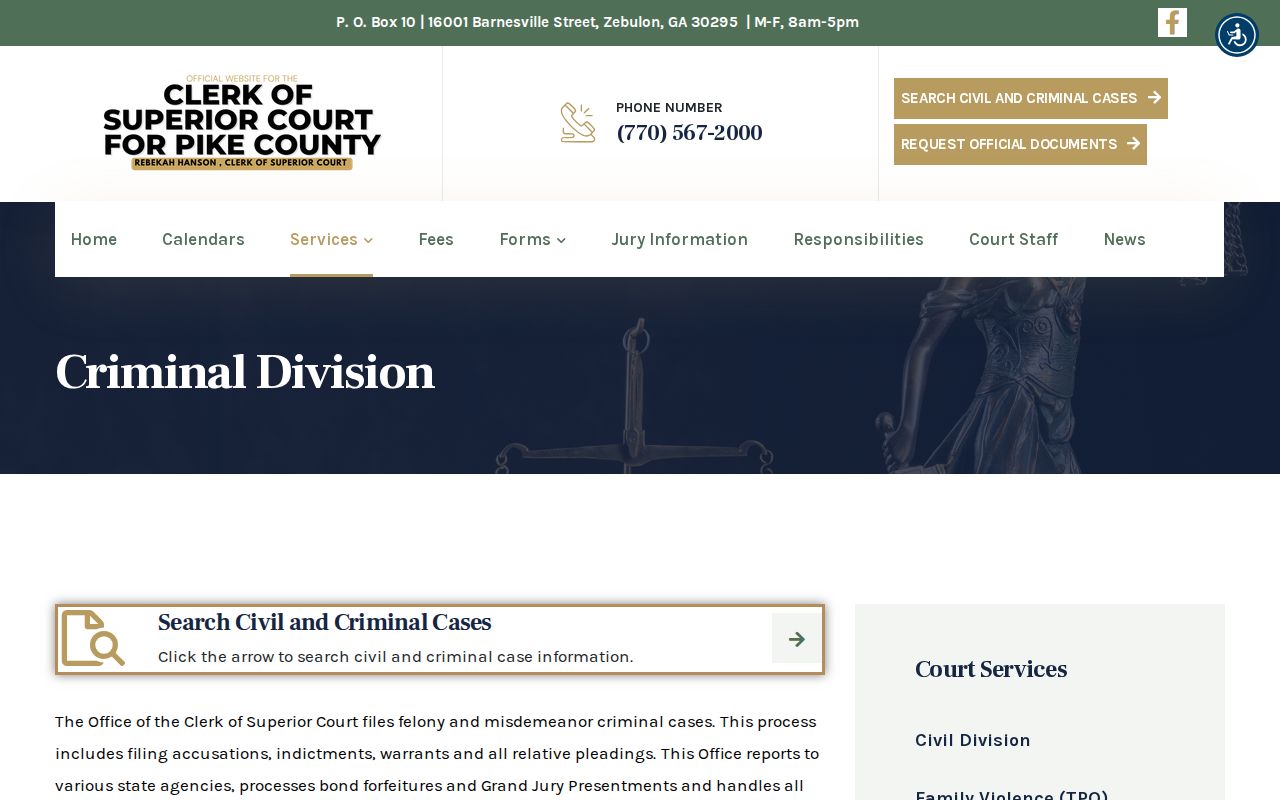
A Clerk filing can show later developments and a disposition that a newspaper booking line never captures.
Pike Arrest Charges Need Court Review
The Pike Clerk criminal division handles felony and misdemeanor filings, indictments, warrants, pleadings, bond forfeitures, and appeals. A disposition is simply the court’s outcome. Dismissal, plea, acquittal, or conviction all count. It follows a case far past the newspaper line. Booking belongs to the jail. The charge question belongs to the court.
Pike Arrest Dates Tell Different Stories
Three dates can steer one Pike search. The event date marks when the agency acted. Booking marks when the jail processed the person. Publication marks when the paper ran the entry. A weekly article can span several days and surface after that window closes. Its post date should never stand in for the real arrest or booking date.
Retention adds a fourth timeline. A current article can stay searchable long after custody ends. A jail record may outlive a news entry that grows hard to find. Holding-area video carries a far shorter state retention category than a jail register. Ask for the exact record early when timing matters.
The Georgia Archives schedule sets a floor for retention, not a promise of online searching. A custodian may apply exemptions or redact protected details. Give a narrow date range. Say whether the request covers a booking record, jail register, release entry, or holding-area video. For a final charge result, ask the court custodian. The newspaper cannot update a jail record.
Historical newspaper digging has its own weakness. OCR can misread a name, split a charge across columns, or pull text from a nearby item. Inspect the scanned issue. Compare it against the agency or court record. A secondary report can locate a lead, but it cannot replace official verification.
Georgia Archives research-help materials note one thing. Original county records generally stay local. Start a modern Pike request with the sheriff, the arresting agency, or the clerk. The state archive serves as a finding aid for older material, not a current booking search and not a substitute for the county custodian. For today’s question rather than a past reporting span, use the Pike County 24 Hour Arrests route and confirm with the jail.
| Date | What it answers |
|---|---|
| Arrest date | When the agency took action |
| Booking date | When the jail recorded intake |
| Publication date | When the news item appeared |
| Disposition date | When the court resolved or changed the case |
Public Record Search
Sponsored Results